
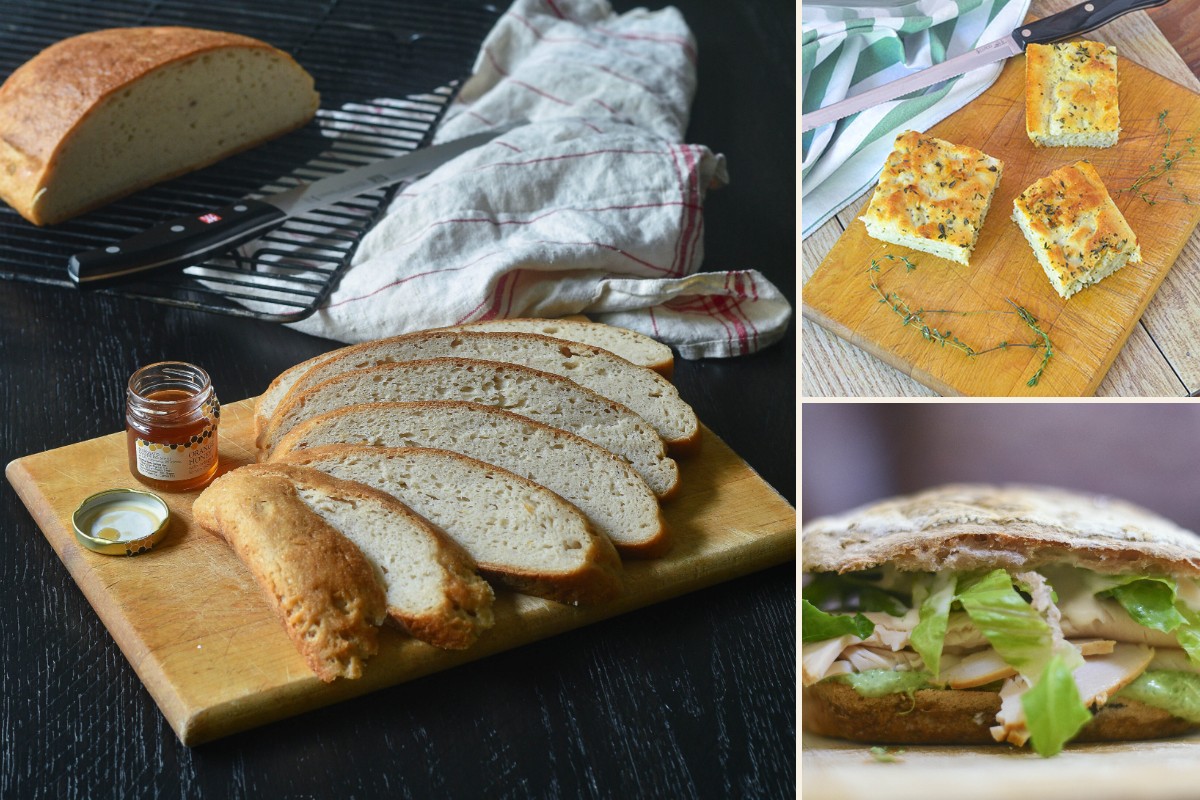
When I started cooking gluten-free for the people at my table, bread was the hardest thing to get right. Store-bought gluten-free loaves cost a fortune, crumbled the second you spread butter on them, and tasted like the bag they came in. So I started baking my own. That was more than a decade ago, and I’ve had a lot of flat, gummy, crumbly failures along the way.
What finally changed things for me wasn’t one magic flour. It was learning what each ingredient actually does. A good flour blend (I use Bob’s Red Mill 1-to-1 for most of my loaves), a binder like psyllium husk to do the job gluten normally does, a little acid, and the patience to let the dough rise. Once I understood that, my breads started holding a sandwich.
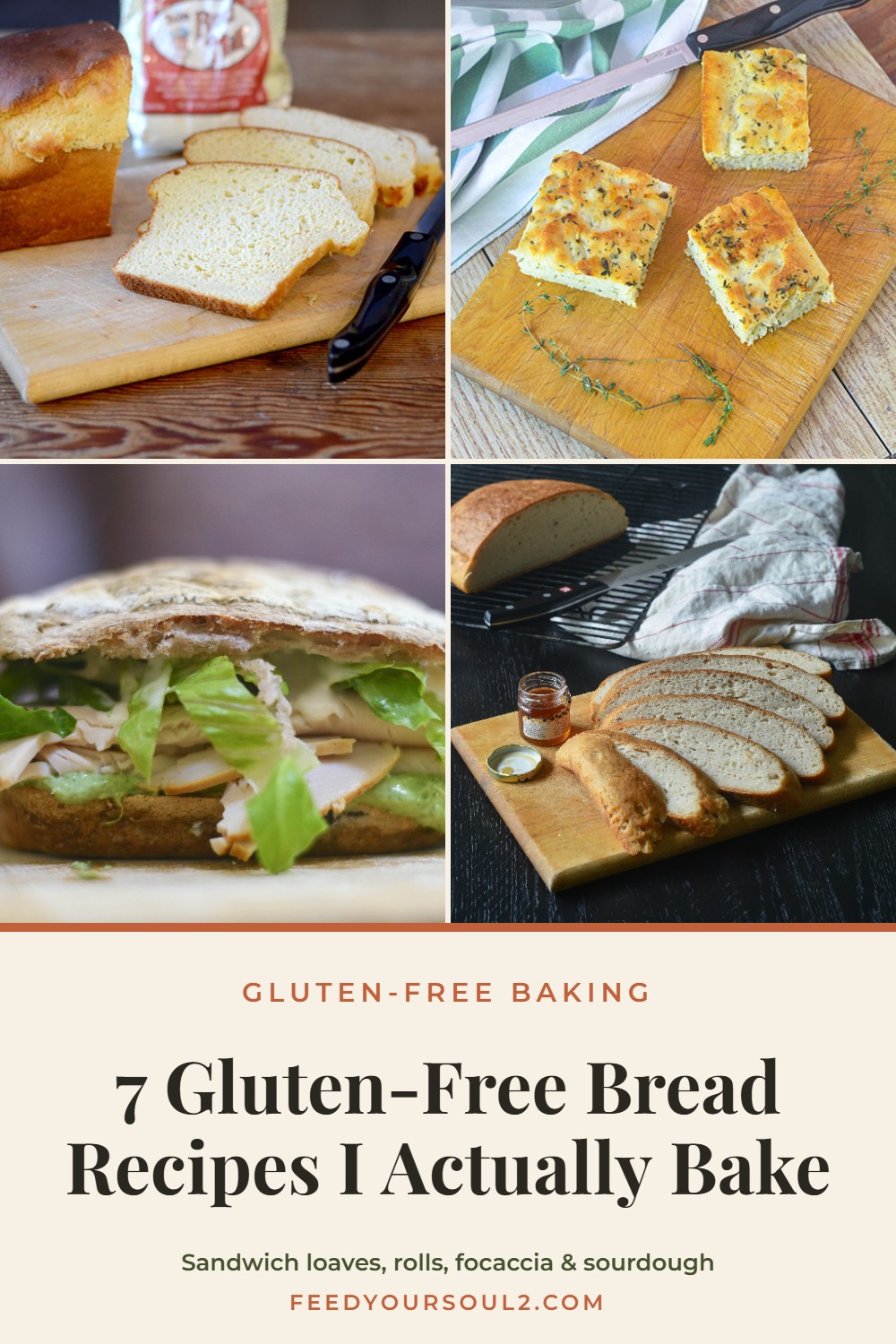
I’ve posted dozens of gluten-free bread recipes on this blog over the years. Some were experiments, some were stepping stones, and a handful became the ones I bake again and again. This post pulls those favorites together in one place, so you don’t have to dig through years of my trial and error to find them.
You’ll find a soft sandwich loaf, two sourdough loaves, focaccia, ciabatta rolls, burger buns and an English muffin bread you toast in the morning. Pick the one that fits what you’re craving, and every one links to its full recipe card.

Why You’ll Love These Gluten-Free Breads
- They actually hold together. Psyllium husk, eggs and a good flour blend give these breads real structure, so they slice, toast and hold a sandwich.
- A bread for every meal. Sandwich bread, burger buns, rolls for subs, focaccia for an Italian dinner and toast for breakfast.
- Easy to start with. The honey white bread is the one I tell beginners to bake first. It uses one flour blend you can buy at most grocery stores.
- Room to grow. When you’re ready, the sourdough loaves and ciabatta take your gluten-free baking up a level.
A Little Gluten-Free Bread History
Gluten-free bread is a newer idea than you might think. The link between wheat and celiac disease is often credited to a Dutch pediatrician, Willem-Karel Dicke. He noticed that children with celiac disease got better during the “Hunger Winter” of 1944–45, when bread was scarce in the Netherlands, and worse again when bread came back. His 1950 thesis helped prove that wheat was the problem. For decades after that, gluten-free bread mostly meant dense loaves from health food stores. The flour blends and binders that make good gluten-free bread at home have only become easy to find in the last 15 years or so.
1. Gluten-Free Honey White Bread (The Sandwich Loaf)
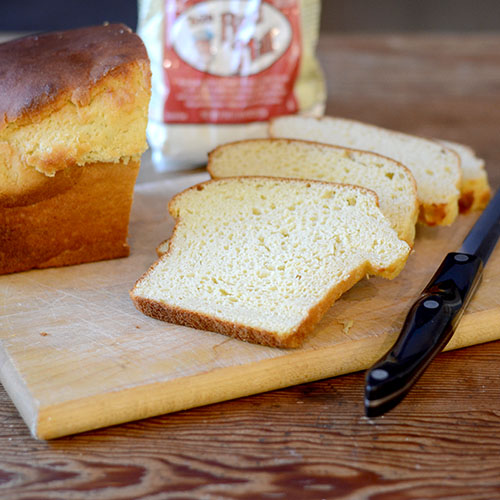
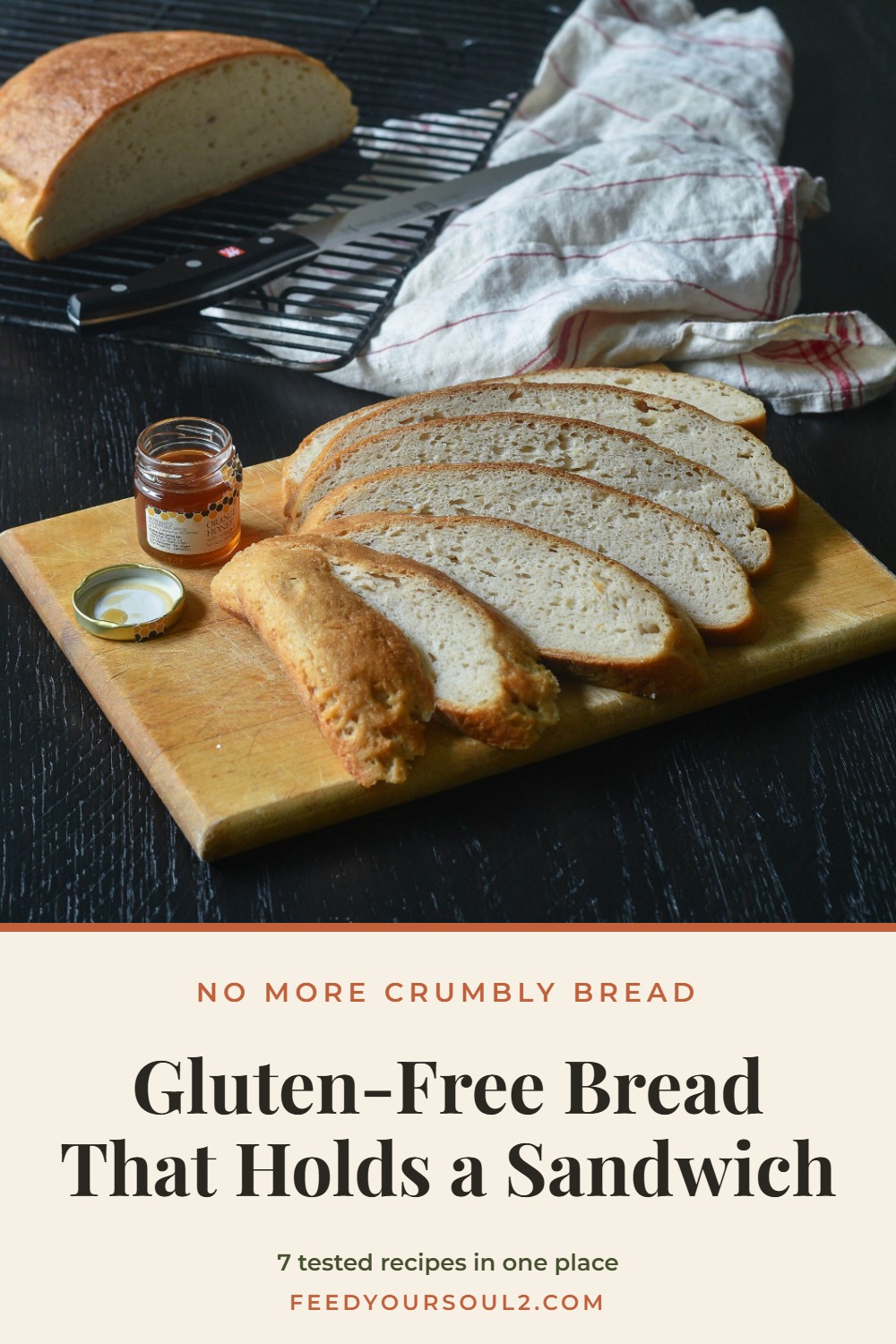
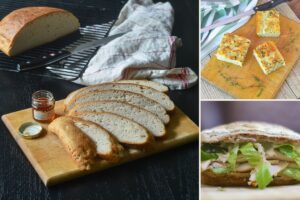
This is the most popular bread on my blog, and the one I tell everyone to bake first. It’s a soft, tender white sandwich loaf made with Bob’s Red Mill 1-to-1 flour, honey, eggs, olive oil and a splash of apple cider vinegar. It slices thin, toasts beautifully and makes the grilled cheese of your dreams. There’s no kneading or shaping: you beat the dough in a stand mixer, let it rise in the pan for an hour or two, and bake.
2. Amazing Gluten-Free Sourdough Honey Bread

If you keep a gluten-free starter, this is the loaf to bake. It gets its structure from psyllium husk, a little cassava flour and two eggs, and its rise from both the starter and a bit of yeast. Club soda in the dough helps lighten the crumb. It takes most of an afternoon, but most of that time is the dough rising on its own. Slice it thick and serve it with good butter.
3. Gluten-Free Psyllium Husk Bread (Crusty Dutch-Oven Loaf)
This is my crusty, artisan-style loaf. It’s a gluten-free sourdough made with Caputo Fioreglut and brown rice flour, bound with psyllium husk powder and baked in a Dutch oven for that crackly crust. If you’ve been missing a real bakery loaf, start here. It’s the bread I make when I want to show people that gluten-free doesn’t have to mean second best.
4. Gluten-Free Focaccia

My all-time favorite. This focaccia is soft and full of flavor from oregano, basil, thyme and dried onion, with plenty of olive oil and butter in the pan. It’s the perfect bread for any Italian dinner, for dipping in olive oil, or split in half for a sandwich. It takes about three hours, mostly rising time.
5. Gluten-Free Ciabatta Rolls
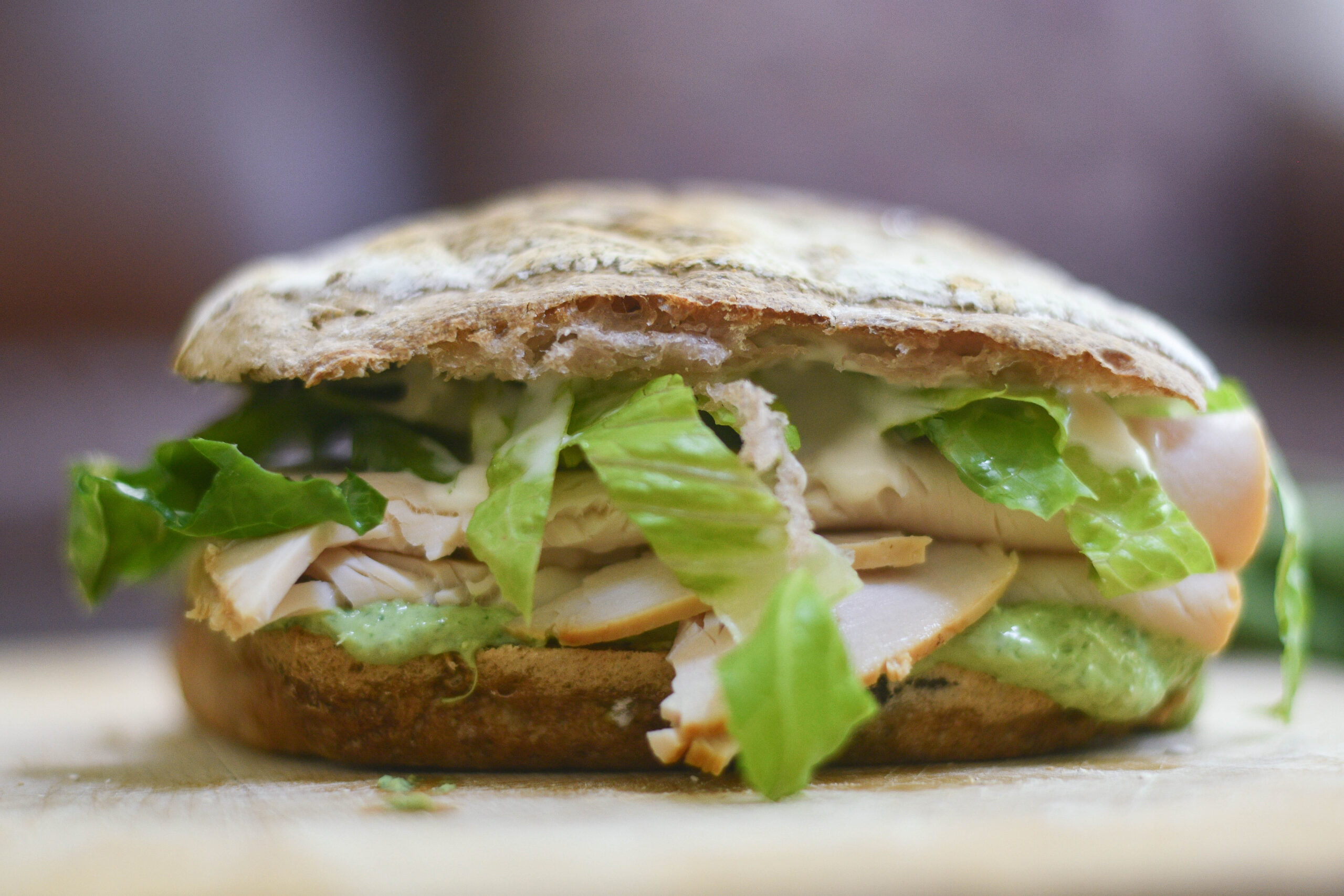
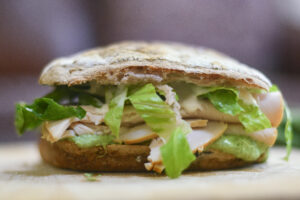
These rolls are almost too good to be gluten-free. A psyllium husk gel gives the dough the stretch it needs, and a mix of Fioreglut, millet and sorghum flours with tapioca starch gives them a chewy, open crumb. Split them for sandwiches, panini or a big Italian sub. The recipe makes six rolls.
6. Gluten-Free Hamburger and Hot Dog Buns

Nothing ruins a backyard burger like a bun that falls apart. These soft buns are made with Bob’s Red Mill 1-to-1 bread flour, psyllium husk, butter and eggs, and they’re sturdy enough for a juicy burger or a loaded hot dog. Shape them round for burgers or long for hot dogs from the same dough.
7. Gluten-Free English Muffin Bread

All the flavor of an English muffin, baked as a loaf. Slice it, toast it well and you get those crispy edges and little nooks that catch melted butter and jam. It’s made with Bob’s 1-to-1 bread flour, psyllium husk and dry milk powder, and it’s my favorite bread for breakfast sandwiches.
Key Ingredients for Gluten-Free Bread
A good gluten-free flour blend
Most of my loaves start with Bob’s Red Mill 1-to-1 Gluten Free Baking Flour, or their 1-to-1 bread flour. For crustier artisan loaves I like Caputo Fioreglut. If you want to understand what each flour does, my Ultimate Guide to Gluten-Free Flours for Bread Making breaks it all down.
Psyllium husk
This is the ingredient that changed my gluten-free baking. Psyllium husk soaks up water and forms a gel that acts a lot like gluten, giving the dough stretch and the bread structure. It’s why my newer breads hold together so much better than my early ones.
Xanthan gum
A small amount helps bind the dough and keep the crumb from falling apart. Some flour blends already include it, so check the bag before adding more.
Eggs, honey and apple cider vinegar
Eggs add structure and richness. Honey feeds the yeast and helps the crust brown. A splash of apple cider vinegar gives the dough a little lift and a better texture.
Yeast or a gluten-free sourdough starter
Most of these breads use active dry or instant yeast. The two sourdough loaves use a gluten-free starter for flavor and rise. Either way, give the dough the time it needs to rise in a warm spot.
Serving Suggestions
- Sandwiches: the honey white bread and ciabatta rolls are my go-tos.
- Burgers and hot dogs: the hamburger and hot dog buns, of course.
- Breakfast: toast the English muffin bread for egg sandwiches, or use the honey white bread for French toast.
- Italian dinners: focaccia with olive oil, or the psyllium loaf with soup.
- Leftovers: day-old gluten-free bread makes great croutons, breadcrumbs and bread pudding.
More Gluten-Free Breads to Try
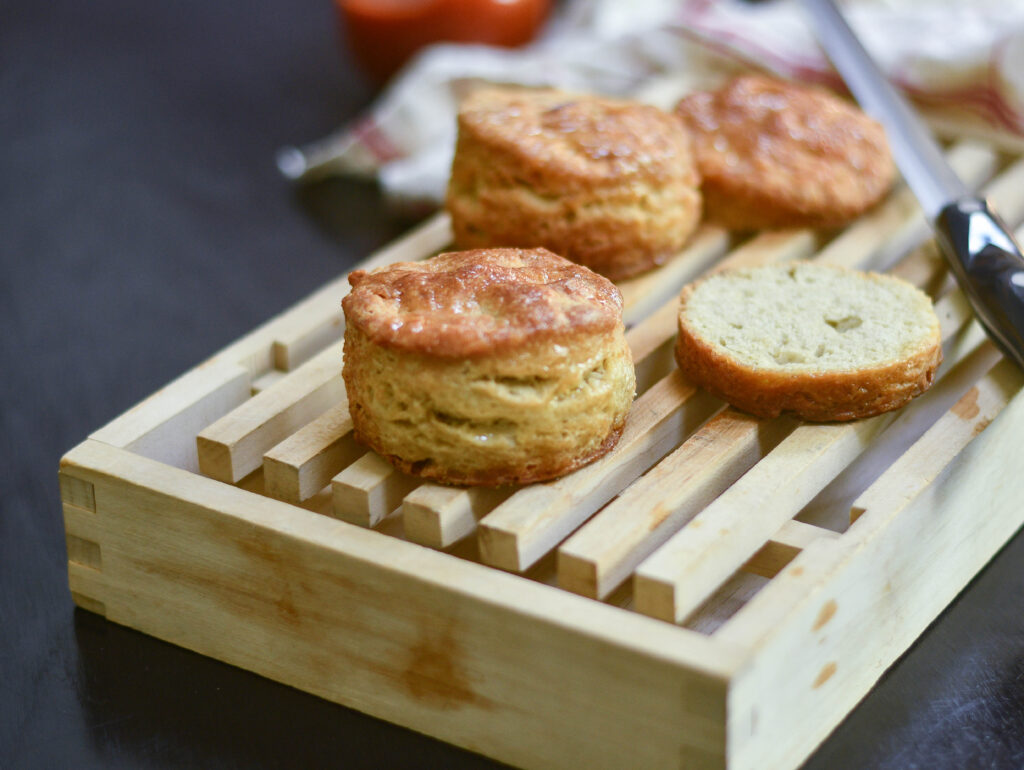
- Gluten-Free Sub Rolls
- Gluten-Free Biscuits
- Easy Mini Cornbread Loaves (Gluten-Free)
- Gluten-Free Steam Bagels
- Gluten-Free White Rice Flour Bread
- Gluten-Free Maple Syrup Sourdough Bread
- Wholesome Gluten-Free Bread Loaf
- Teff and Oat Flour Gluten-Free Bread
- Gluten-Free Buckwheat Bread
Gluten-Free Bread FAQ
Why does gluten-free bread fall apart?
Without gluten, there’s nothing holding the crumb together. A binder like psyllium husk or xanthan gum, plus eggs, fixes most of that. Letting the bread cool completely before slicing helps too.
Can I freeze gluten-free bread?
Yes. Slice it first, wrap it well and freeze for up to a month. Toast slices straight from the freezer.
Which bread should I bake first?
Start with the Gluten-Free Honey White Bread. It’s the easiest, uses one flour blend and makes a great everyday loaf.
Final Thoughts
Gluten-free bread doesn’t have to be a sad, crumbly compromise. These are the breads that taught me that, one failed loaf at a time. Start with the honey white bread, work your way up to the sourdough and ciabatta, and let me know in the comments which one becomes your favorite.




comments – I answer every one.