
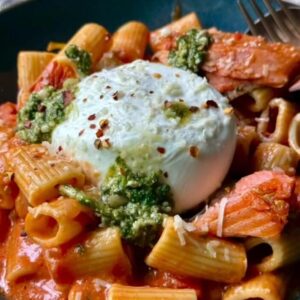
Can you really freeze pasta that’s already been cooked? When I filmed this reel, I honestly didn’t think so. Every time I’d tried before, I ended up with mushy noodles, icy sauce and freezer burn. But I had a big batch of my smoked salmon vodka pasta with burrata left over, and I didn’t want it to go to waste.
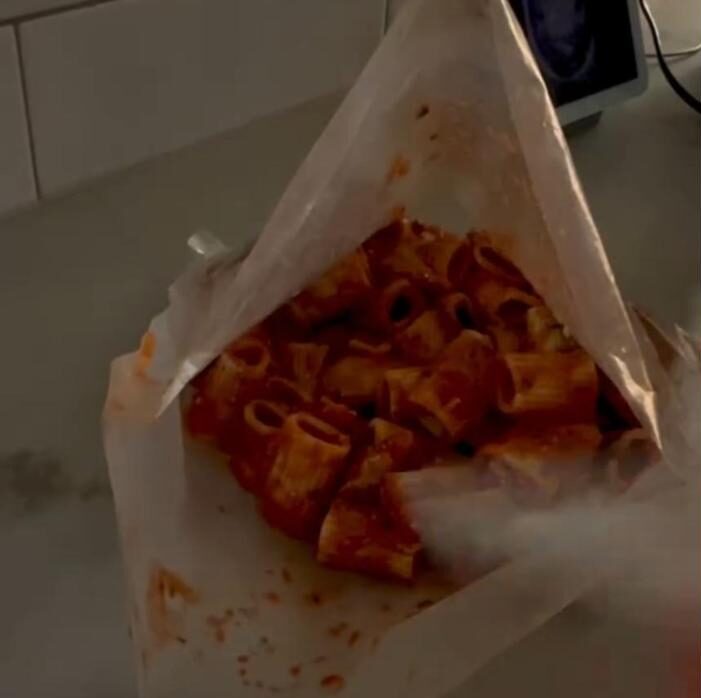
So I tried something different. Instead of a container or a zip-top bag, I vacuum sealed it. I let the pasta cool, spooned it into a vacuum seal bag, cleaned the edge of the bag really well and sealed it tight. Then it went into the freezer.
When I pulled it out and reheated it, it came back tasting like I’d just made it. The penne held its shape, the sauce was still creamy, and with a fresh ball of burrata and a spoonful of pesto on top, nobody would have guessed it had been frozen.
A lot of you weighed in when this reel went up. Some of you already freeze pasta all the time, and some of you said you never have leftovers to freeze. Here’s exactly how I do it, so you can cook once and eat well twice.
Jump to Recipe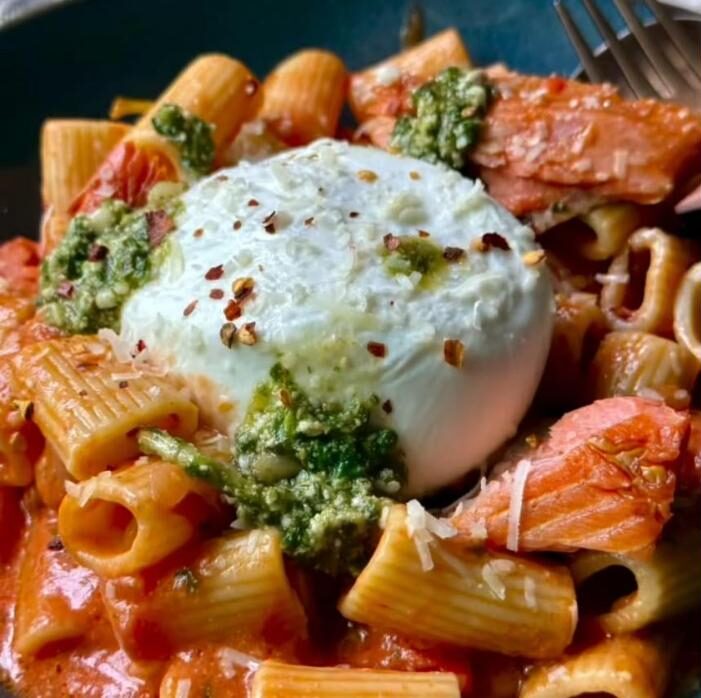
Watch this reel on Instagram
Why Vacuum Sealing Works
- No air, no freezer burn. Freezer burn happens when air dries out the surface of food. Vacuum sealing removes the air.
- It freezes flat and fast. Thin, flat bags freeze quickly, which means smaller ice crystals and better texture.
- Easy portions. Seal one or two servings per bag and pull out only what you need.
- Saves space. Flat bags stack neatly in the freezer.
How to Freeze Cooked Pasta
Cool It Completely
Let the pasta cool to room temperature, then chill it if you have time. Warm pasta creates steam and ice crystals in the bag.
Portion It Into Vacuum Seal Bags
Spoon one or two servings into each bag. Sauced pastas freeze better than plain, because the sauce protects the noodles.
Clean the Edge Really Well
This is the step people skip. Wipe the inside and outside of the bag opening with a paper towel. Any sauce on the seal line will keep the bag from sealing properly.
Get a Very Good Seal
Vacuum seal the bag and check that the seal is complete all the way across. If it isn’t, cut it off and seal again.
Freeze Flat
Lay the bags flat in the freezer, then stack them once they’re frozen. Label each with the date.
How to Reheat It
Thaw the bag in the refrigerator overnight, or drop the sealed bag into gently simmering water until it’s heated through. Then finish it in a skillet with a splash of water, cream or extra sauce to loosen it up. Fresh toppings make all the difference: burrata, pesto, fresh basil or a shower of parmesan.
Which Pastas Freeze Best?
- Best: sturdy shapes in sauce, like penne, rigatoni and ziti, plus baked pastas, lasagna and mac and cheese.
- Good: cream and tomato sauces. Cream sauces may need a splash of liquid when reheated.
- Skip: very thin pasta like angel hair, and pasta salads with raw vegetables.
A Little Freezing History
We take the freezer for granted, but quick-frozen food is less than a hundred years old. In the 1910s, Clarence Birdseye was working in Labrador, Canada, when he noticed that fish frozen almost instantly in the arctic cold tasted fresh months later. Back home, he developed a quick-freezing process in the 1920s that kept ice crystals small and food tasting fresh, and frozen food went on to change how the world cooks and eats.
What to Make and Freeze
- Smoked Salmon Vodka Pasta with Burrata
- How to Make a Roux and Cheese Sauce for Mac and Cheese
- Creamy Mexican Chicken Sausage Pasta
Final Thoughts
So, can you freeze cooked pasta? Yes, and vacuum sealing is the way to do it. Cook a big batch, freeze the leftovers in portions, and you’ve got a great dinner waiting on a busy night. Let me know in the comments what pasta you’re going to freeze first.

The Recipe
How to Freeze Cooked Pasta (Vacuum Seal Method)
Ingredients
- 4 portions cooked pasta with sauce, cooled completely; Peter used his smoked salmon vodka penne
- vacuum seal bags
- paper towel
Instructions
Freeze
- Let the pasta cool completely, then portion it into vacuum seal bags, one or two servings per bag.
- Wipe the inside and outside of the bag opening clean with a paper towel. Any sauce on the seal area will keep it from sealing.
- Vacuum seal and check that you have a tight, complete seal.
- Lay the bags flat in the freezer so they freeze quickly and stack neatly. Label with the date.
Reheat
- Thaw in the refrigerator overnight, or drop the sealed bag into gently simmering water until heated through.
- Finish in a skillet with a splash of water, cream or sauce to loosen it, and top with fresh garnishes like burrata, pesto or parmesan.






comments – I answer every one.