
A roux is just butter and flour cooked together, and it’s the secret to a silky, never-grainy cheese sauce for mac and cheese. Learn it once and you’ll never go back to the box. Here’s exactly how I make it, what to watch for, and how to fix it when it goes wrong.
Which milk makes the best cheese sauce? I tested heavy cream, whole milk, evaporated milk and coconut milk in the same mac and cheese, and my wife blind-tasted all four. Heavy cream came in third. See the results and the winning recipe →
How to make a roux for mac and cheese (quick answer)
- Melt 3 tablespoons of butter over medium-high heat, stir in 3 tablespoons of flour, and cook a minute or two until it’s a smooth, pale paste.
- Add room-temperature milk a little at a time, letting each splash absorb before the next, until the sauce is creamy, not runny.
- Lower the heat and stir in shredded cheese a handful at a time until it melts. Toss with cooked pasta.
Why this works
- Equal parts butter and flour (3 tablespoons each) make a paste that thickens the liquid without lumps.
- Warm liquid, added a little at a time. Each splash is fully absorbed before the next, so the sauce stays smooth.
- Coconut milk + chicken stock make a creamy sauce that’s lighter than heavy cream.
My tips
- Your liquid should be room temperature or warmed. Cold liquid into a hot roux is how lumps happen.
- Don’t rush: let each addition absorb before adding more.
- The spoon test: the sauce should coat a wooden spoon and stay there. If it runs off, keep cooking. Too thick? Add a splash of stock.
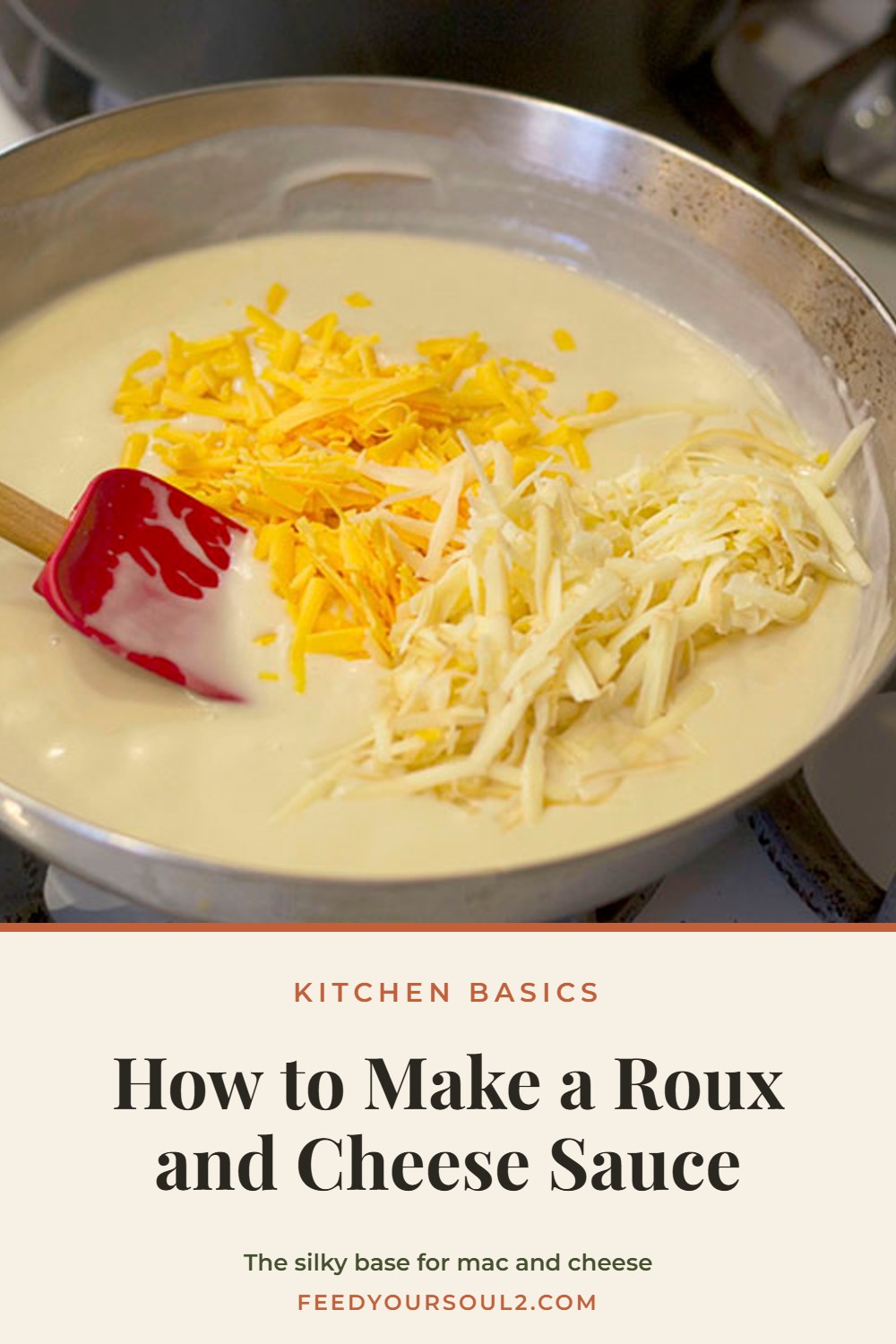
- Add the cheese a handful at a time and let each melt before adding more.
How to fix it
- Lumpy? Whisk hard, or pour it through a strainer. Next time, add the liquid more slowly.
- Too runny? Keep it over the heat a few minutes longer; it thickens as it cooks.
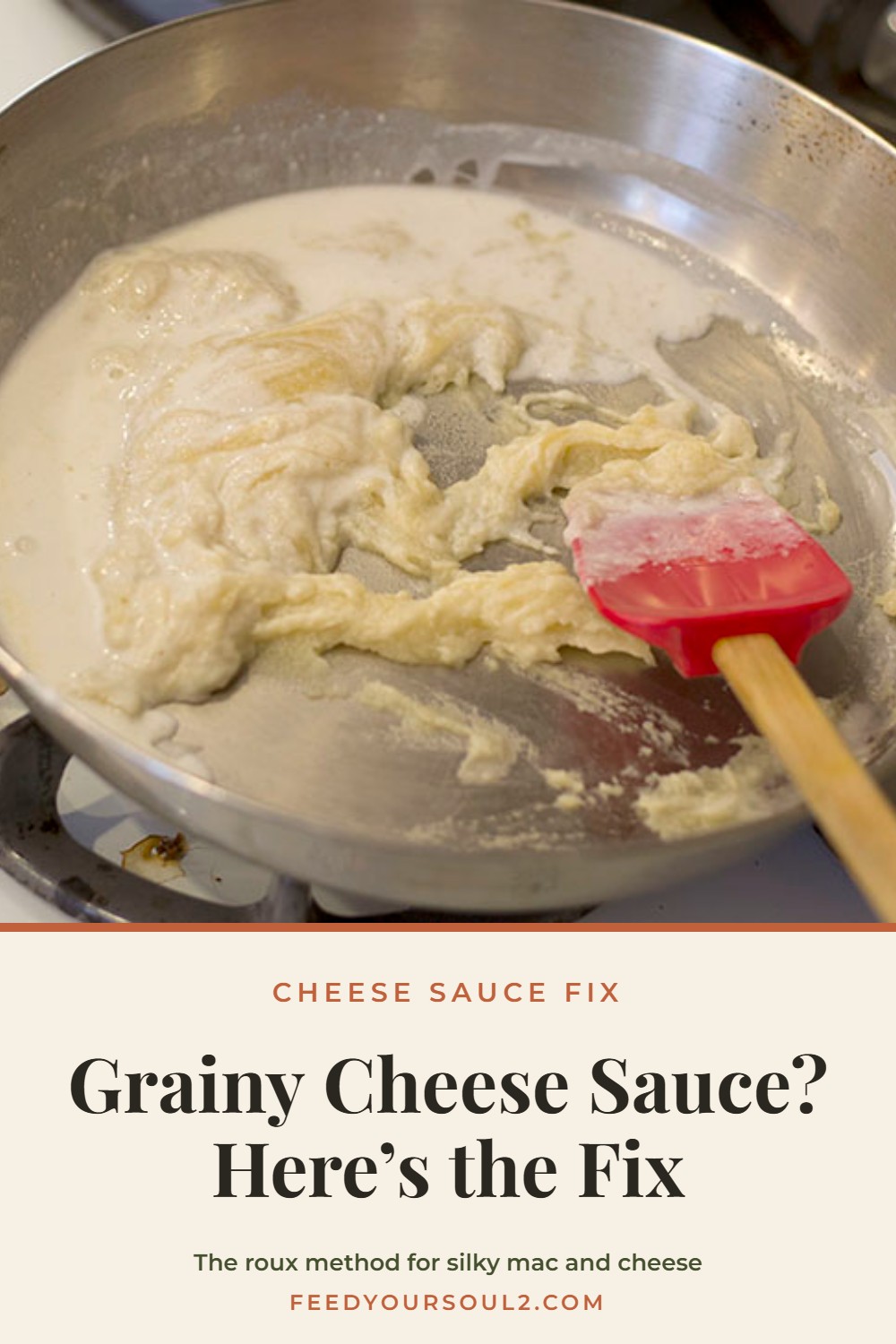
- Grainy cheese sauce? The heat was too high when the cheese went in. Lower the heat first, and shred your own cheese (bagged shredded cheese has coatings that don’t melt as smoothly).
Want 5 restaurant-quality dinners?
Get my free guide, Restaurant Quality at Home: 5 signature dinners, each with one chef’s move.
The story behind it
How to Make a Roux and Cheese Sauce


Many people are nervous to make a roux or maybe do not even know what a roux is. It is quite easy and this post shows you how to make a roux and cheese sauce. Once you learn how to make a roux, you will never eat macaroni ‘n cheese out of the box again. We will get to that later. A roux is a mixture of butter and flour – or should I say a blond roux. A dark roux is made up of canola oil and flour and is cooked for a much longer period. A roux is used in many types of cooking – One as a thickening agent and two as a sauce base. As you know, using a roux as a thickening agent is a base of Cajun cooking which I used in a number of different ways last week in my Cajun Week: 1)Creole Chili; 2)Cajun Macaroni “n Cheese and 3)Gumbo Pot Pie.
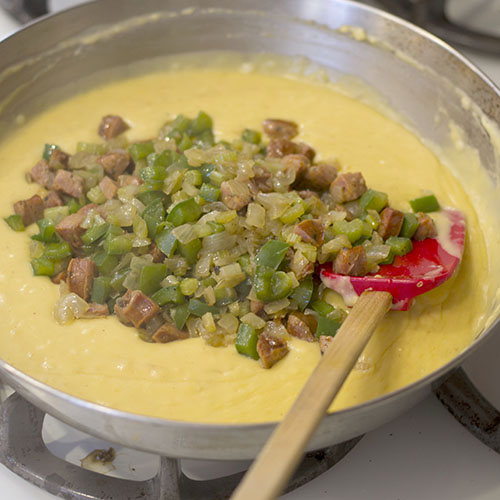
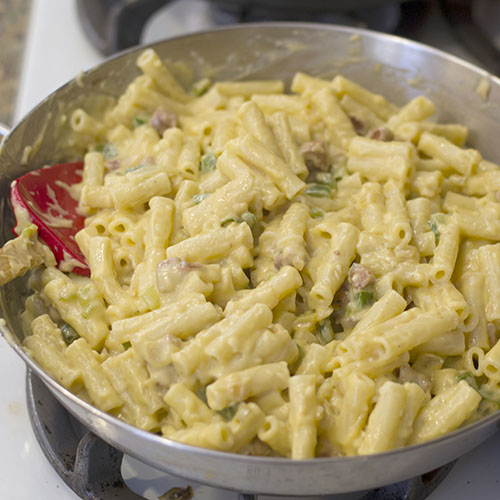
The roux, as noted above, is a mixture of equal parts of butter and flour. Mixed together well and then a liquid is added to thicken it up. Then, different applications can be developed. In this case, it is the base for a cheese sauce that I use for macaroni ‘n cheese often. It is also used for a bechamel sauce (a reader correctly pointed out to me that the correct term for the sauce once the cheese is added is a mornay sauce) commonly used in French cooking as well as in Lasagna for Italian cooking.
Ingredients:
- 3 tbsp butter
- 3 tbsp all-purpose flour
- 1 – 15 oz can of coconut milk
- 6 oz of evaporated milk
- 1/2 cup sharp cheddar cheese
- 1/2 cup of smoked Gruyère
Directions:
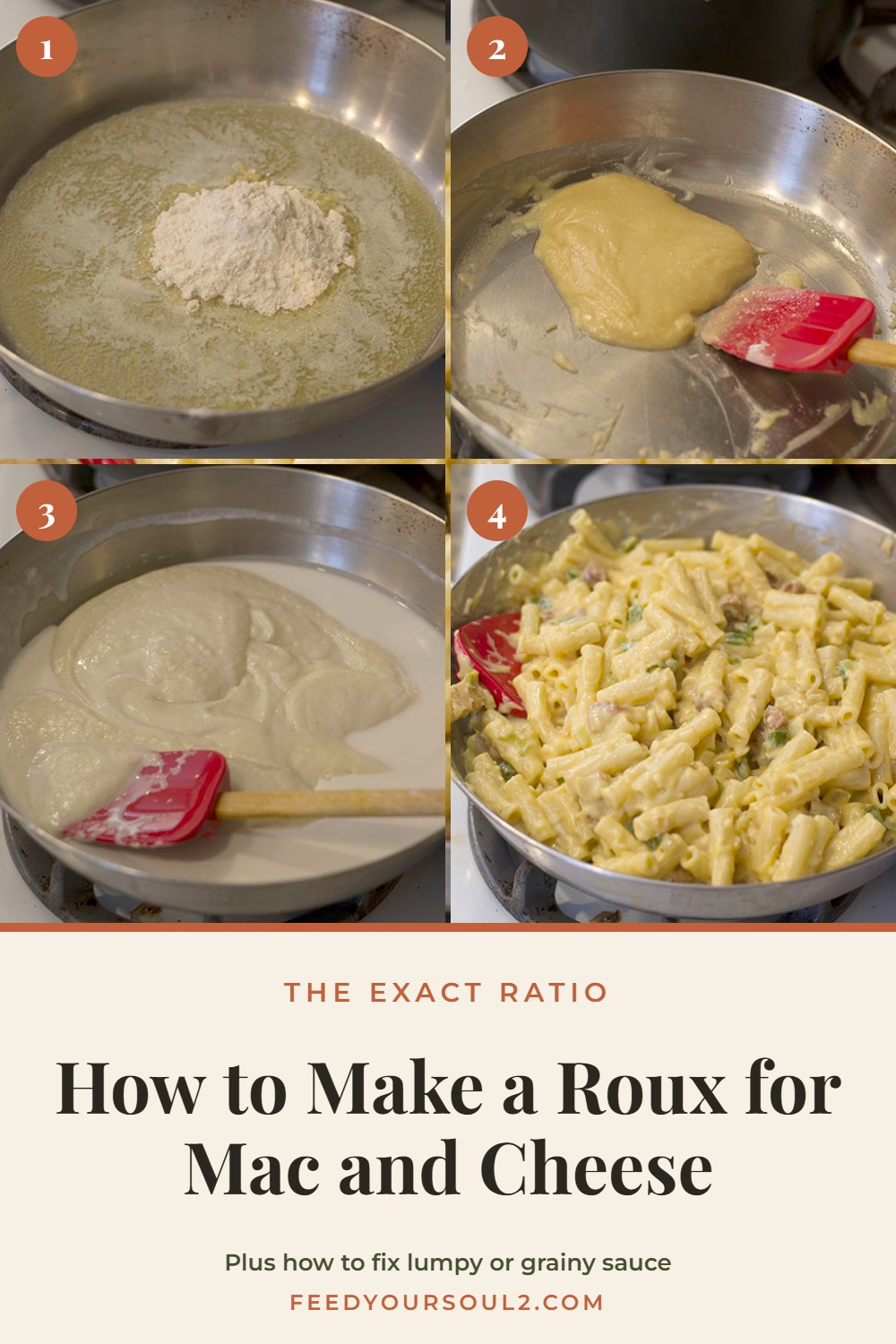
Heat a sauté pan on medium high heat. Add the butter and when melted, add in the flour.
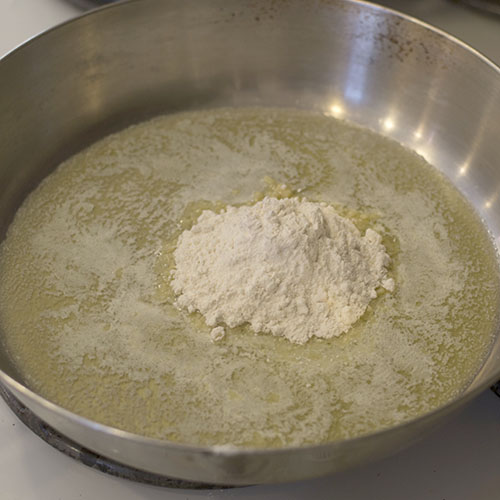
Using a spatula, mix until the flour absorbs all the butter. The result will be a paste like mixture.

Next, you add your liquid in a little at a time.

The liquid should be room temperature or heated on a low temp if pulled from the fridge. As you add the liquid to the roux, make sure the initial liquid is fully absorbed before adding in more to your mixture.
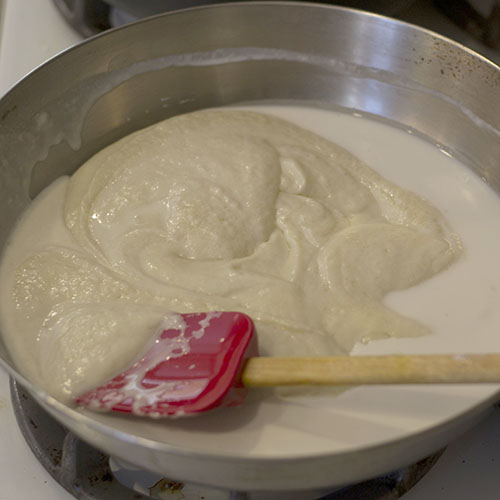
Keep adding the liquid until the roux becomes creamy. If the roux is runny, you have added to much liquid. Over time, you will learn the consistency you want in your roux. The roux should look creamy, not runny or to thick.

Once the roux is complete, start adding your cheese a little at a time.

When it is fully melted, add until all the cheese has been used. Happy cooking and I hope this tip helps you in your cooking. Enjoy!
Blond roux vs. dark roux
The roux in this recipe is a blond roux: equal parts butter and flour, cooked just a minute or two until pale. That’s the base for cheese sauce, béchamel and gravy.
A dark roux swaps the butter for oil and cooks much longer, stirring the whole time, until it turns the color of chocolate. That’s the base of a Cajun gumbo. The darker the roux, the nuttier the flavor and the less it thickens.
What to make with a roux, by color
Once you can make a roux, you can make a lot of dinners. Same fat, same flour; how long you cook it decides what it’s for. Here are the recipes on this blog that start with one.
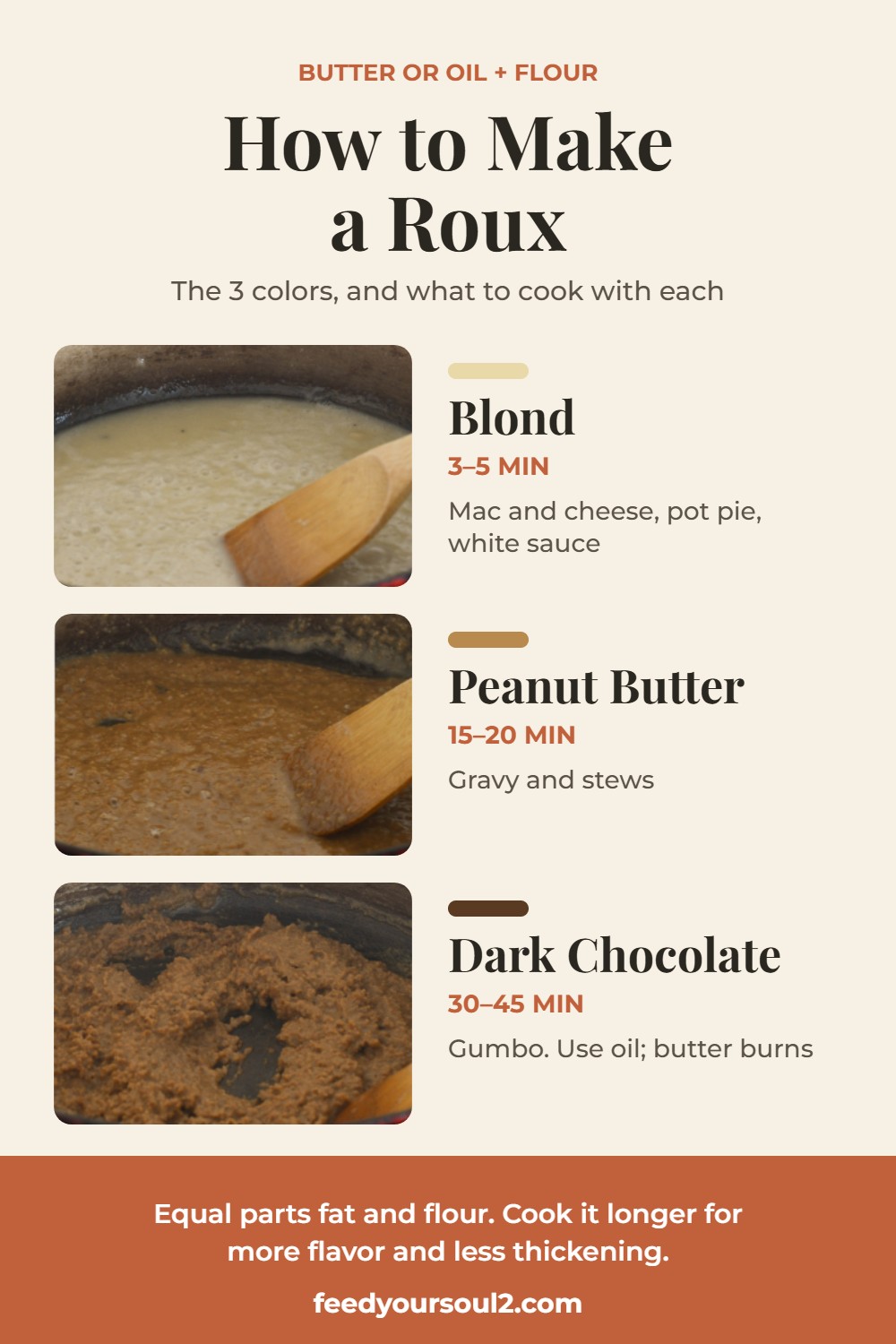
Blond roux (3–5 minutes)
Pale and creamy. It thickens the most, so it’s the one for cheese sauces and creamy fillings.
- Mac and Cheese 4 Ways: same roux, four different milks, tested side by side
- Ultimate Gluten-Free Chicken Pot Pie: a gluten-free roux makes the creamy filling
- Gluten-Free Creamy Chicken Vegetable Soup
- Biscuits with Mushroom Gravy
- Turkey Tetrazzini
- Irish Beer Cheese Dip
Peanut butter roux (15–20 minutes)
Toasty and golden brown, with more flavor and a little less thickening. Made for gravy.
- Roast Turkey with Stout Gravy: the roux starts in butter with roasted vegetables and herbs
Dark chocolate roux (30–45 minutes)
Use oil, not butter, which burns before it gets this dark. It barely thickens, but it gives gumbo its deep, nutty flavor.
- Chicken and Smoked Beef Sausage Gumbo: uses Isaac Toups’ fast roux method
- Best Chicken and Sausage Gumbo
Gluten-free roux: a 1:1 gluten-free flour blend works for any of these. Sweet rice flour also makes a smooth roux for sauces and gravy.
Variations
- Cheese swaps: I’ve moved from smoked Gruyère to smoked Gouda. Sharp cheddar plus any smoky cheese works.
- Spice it up: add 2–3 teaspoons of smoked paprika or a pinch of cayenne.
- Gluten-free: a 1:1 gluten-free flour blend can stand in for the all-purpose flour.
- Swap the milk: out of heavy cream? Evaporated milk won my four-milk mac and cheese test, and whole milk with a little extra butter came second.
Same roux, different dip: use it for my Irish Beer Cheese Dip.
Questions people ask
What’s the ratio for a roux?
Equal parts fat and flour by volume: 3 tablespoons butter to 3 tablespoons flour.
How long do you cook a roux for mac and cheese?
Just until the flour absorbs the butter and forms a smooth paste, a minute or two. For a cheese sauce you want it pale, not browned.
Why is my cheese sauce grainy?
Usually too much heat when the cheese goes in, or pre-shredded cheese. Lower the heat and shred your own.
Can I make it ahead?
Yes. Refrigerate the sauce and rewarm it gently with a splash of stock, stirring until smooth.
What’s the best milk for a roux cheese sauce?
Evaporated milk. In my blind taste test of four milks, it made the silkiest, most stable sauce and won outright. Whole milk with a tablespoon of extra butter came second, heavy cream third and coconut milk last.
You might also like: Mac and Cheese 4 Ways: Which Milk Wins? · Easy Weeknight Baked Pasta with Fresh Mozzarella · Ultimate Two-Layered Potato Bake · Authentic Mexican Risotto
Made this? Leave a star rating in the recipe card below and tell me how it turned out in the comments. I read every one.

The Recipe
How to Make a Roux and Cheese Sauce
Ingredients
- 3 tbsp Butter
- 3 tbsp All-purpose flour
- 15 Ounces Coconut Milk
- 6 Ounces Chicken stock, or evaporated milk (my original version)
- 1/2 Cup Sharp Cheddar, Shredded
- 1/2 Cup Smoked Gouda, shredded (or smoked Gruyère)
Instructions
- Heat a sauté pan on medium high heat. Add the butter and when melted, add in the flour. Using a spatula, mix until the flour absorbs all the butter. The result will be a paste like mixture. Next, you add your liquid in a little at a time. The liquid should be room temperature or heated on a low temp if pulled from the fridge. As you add the liquid to the roux, make sure the initial liquid is fully absorbed before adding in more to your mixture. Keep adding the liquid until the roux becomes creamy. If the roux is runny, you have added to much liquid. Over time, you will learn the consistency you want in your roux. The roux should look creamy, not runny or to thick. Once the roux is complete, start adding your cheese a little at a time. When it is fully melted, add until all the cheese has been used. Happy cooking and I hope this tip helps you in your cooking. Serve and Enjoy!
Recipe Notes
Nutrition Information









Responses
comments – I answer every one.
13 years and still a great and easy to follow recipe. I only took off a star because I like using heavy cream, but this is a great alternative
I am so glad you still like it. The only reason I did not use cream was that I was trying to lighten it up a little. By all means, use heavy cream. That truly will make it taste so rich. I will be updating the recipe shortly and will offer a few different ways to make it so one can choose how rich they want to make it.